For interior designers

The design is yours. The decisions should be too.

Get involved early and you are the designer for this project. Wait, and you are competing with two others for it.

What usually happens

By the time you are called, most of it has already been decided.

The cans are up in a grid. The shades are a box above the window. Nobody asked, so the house got built to a default — and the work becomes arranging beautiful things inside somebody else's decisions.

None of that was inevitable. It was just decided early, by people who were in the room before you.
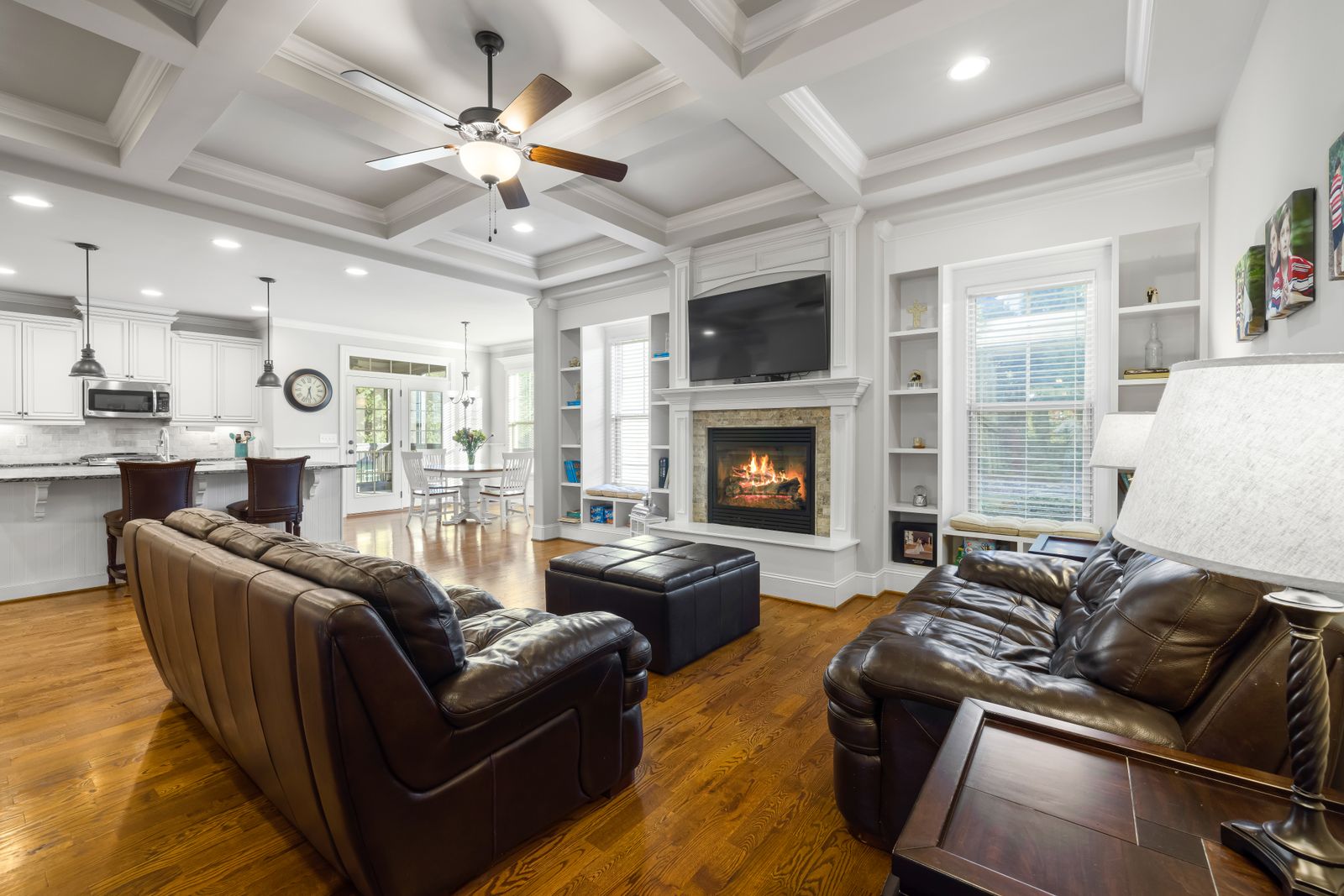
An expensive great room with a coffered ceiling peppered with recessed downlights and a ceiling fan light, everything flatly and evenly lit.
What usually gets built. Beautiful furniture, beautiful finishes, and an electrician's ceiling. Recessed cans punched through a coffered ceiling that should have been backlit — and a fan light, in a room like this. Nobody decided any of it. It was laid out.
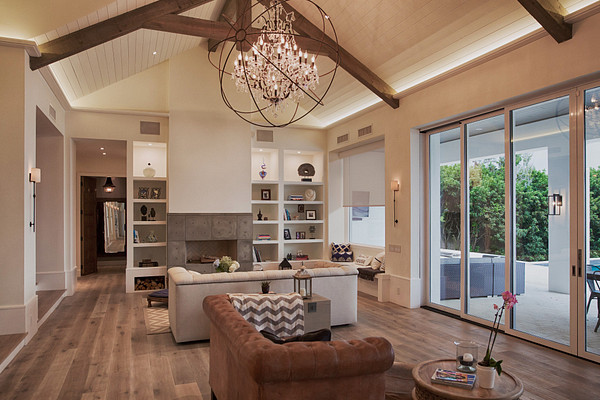
A living room lit in layers — cove light washing the vaulted ceiling, an orb chandelier, sconces, lit shelving and a shade concealed above the window.
What was actually envisioned. The ceiling lights itself. A chandelier instead of a fan. Nothing overpowering, nothing hard on the eyes, and a shade you cannot find. Nothing in this room cost more to imagine — it only had to be decided sooner.

Four ways to put a shade in a window

Three of those are decisions.

Milled in

The house came that way

The finish carpenter mills the header out of wood to match the room. On a farmhouse it reads as though it was always there. High-end work — not every builder will do millwork.

Pocketed

You never see it

The shade lives inside the header. It needs nine or ten inches drawn into the structure before the house is framed — free on paper, impossible after drywall.

Exposed — Palladiom

Meant to be looked at

No pocket, no fascia, no recess. Machined aluminium and brass, designed to be seen. Right in a modern house. Wrong in an old one — and not because it is ugly.

The fourth is a box on the wall — and it is what you get when nobody made one.

Where the line is

The shades stay yours. The technical problems become ours.

Yours

The shades — every one of them, and everything you make on them. We do not take a cent of that. If you are a Lutron shade dealer you invoice them yourself and we invoice the control separately. If you are not, it goes on our paper and we write you the check.

The fabric, the colour, the room, the vision you and the homeowner have been building since the first meeting. Every decision anybody will ever see is yours.

Ours

Every technical decision behind it — and the responsibility for it working. You will never be asked to know how, and you will never have to lie awake wondering whether an expensive thing you specified is going to work.

When it needs attention in year five, the homeowner calls us, not you — and remembers that you are the one who brought us in.

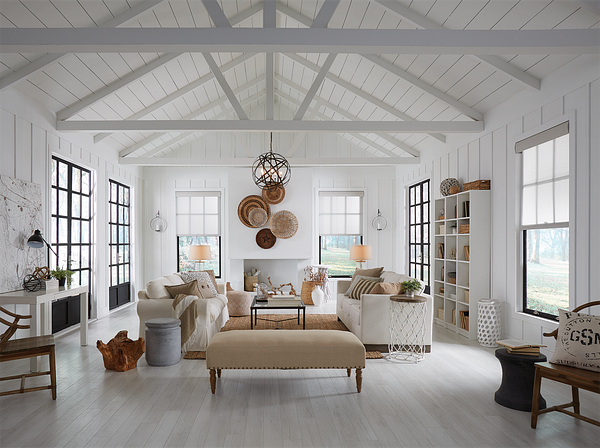
A white farmhouse living room under an open truss ceiling, lit by wall sconces with roller shades at the windows and no recessed downlights.
No downlights anywhere in this room. That was a decision, and it was made before the ceiling closed.

Your deadline is not drywall

It is the electrician.

The electrician decides where the light in that room comes from. He lays out the ceiling, he cuts the holes, and from that morning the lighting is finished — whatever anybody had in mind for it.

He is not being careless. His job is to make the light turn on, and nobody ever gave him a different one. By the time you are looking at drywall the decision is years old.

So the date that matters to you is not drywall. It is the day somebody lays out that ceiling — while it is still a ceiling and not a grid of holes. Nobody is going to carve up a finished coffered ceiling afterwards, and no amount of beautiful furniture fixes light coming from the wrong places.

The ask

Tell us about the next one.

You do not need drawings, and most designers do not have them. Tell us what you want the room to do — where the light should fall, what should disappear, how it should feel at four in the afternoon — and we will give the architect the specification that makes it possible.

Ceiling layout, blocking, pockets, panel locations, the runs that have to be on somebody's drawing. You never have to argue for any of it. That is our half.

vince@smarthometheaters.com We do not sell shades, fabric or motors. We specify them, and we supply and run the control.
Our whole reason for beingAnd we do not leave.

The room still looks like that in year five — after a driver dies and three bulbs get changed. Most people in this trade finish and move on; in twenty-five years we have never left a house. We have only ever lost a client to a move or a death, and in several of those houses we still look after the system for whoever lives there now.

And the software that looks after it afterwards is ours too. Ixome programs, updates and watches Control4 systems remotely — no truck, no trip charge. It is where the technical detail lives.

Go to Ixome.ai